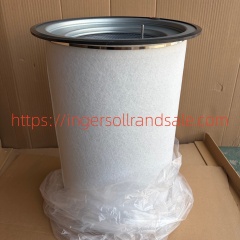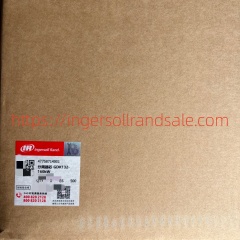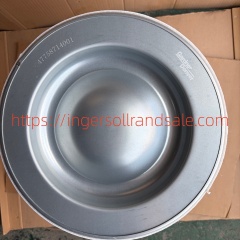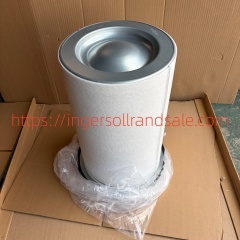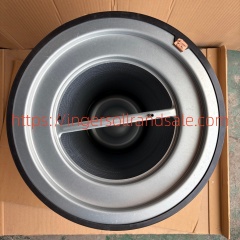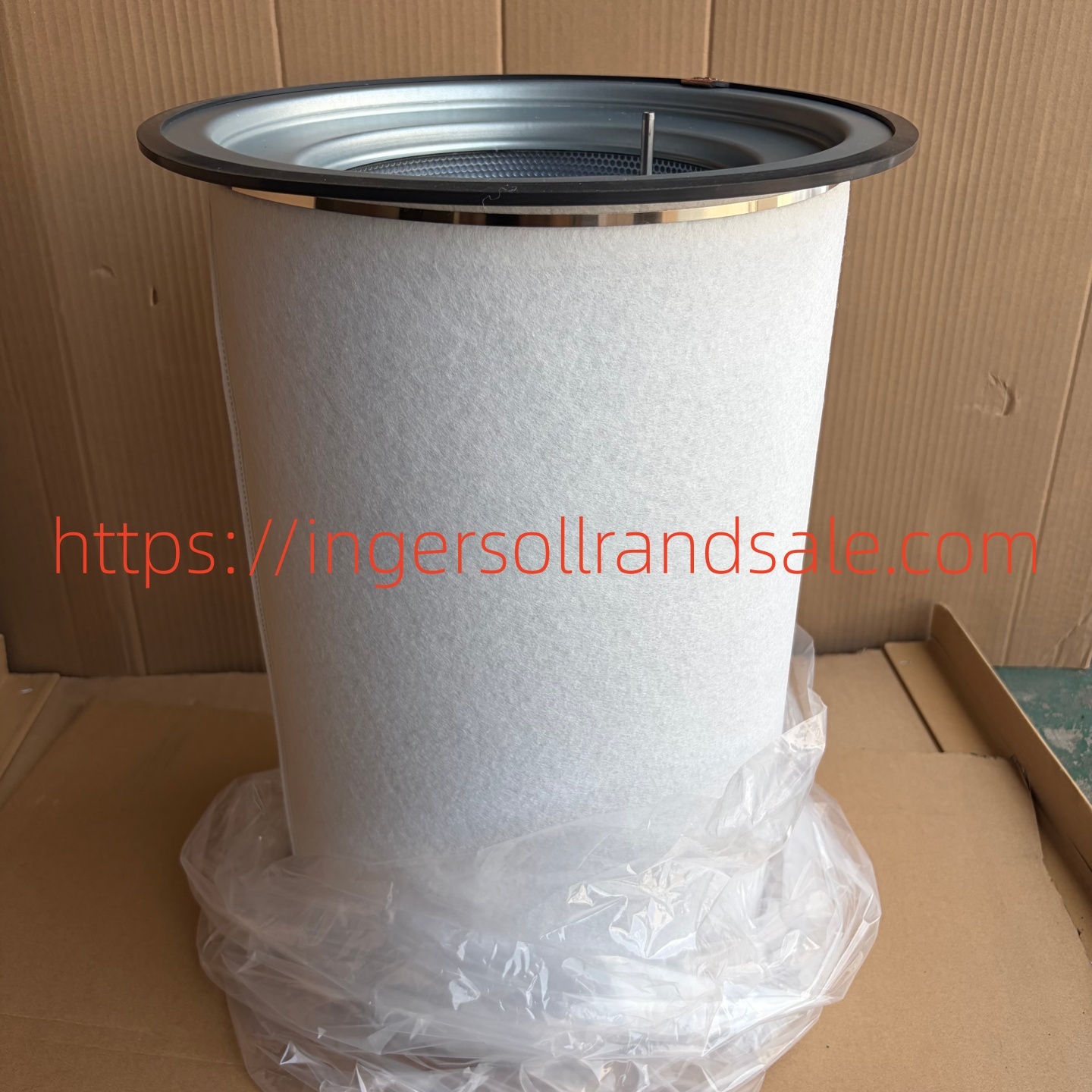
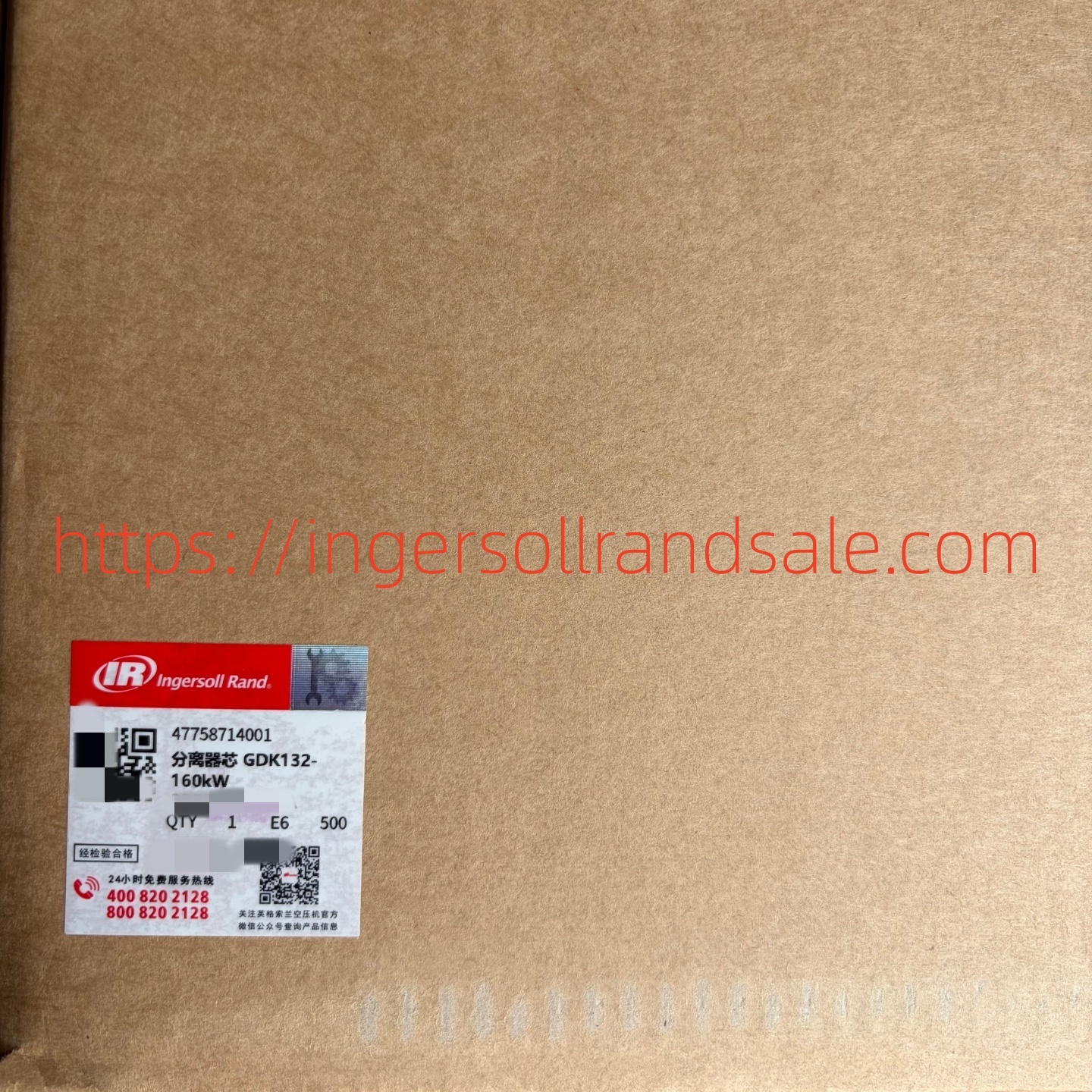
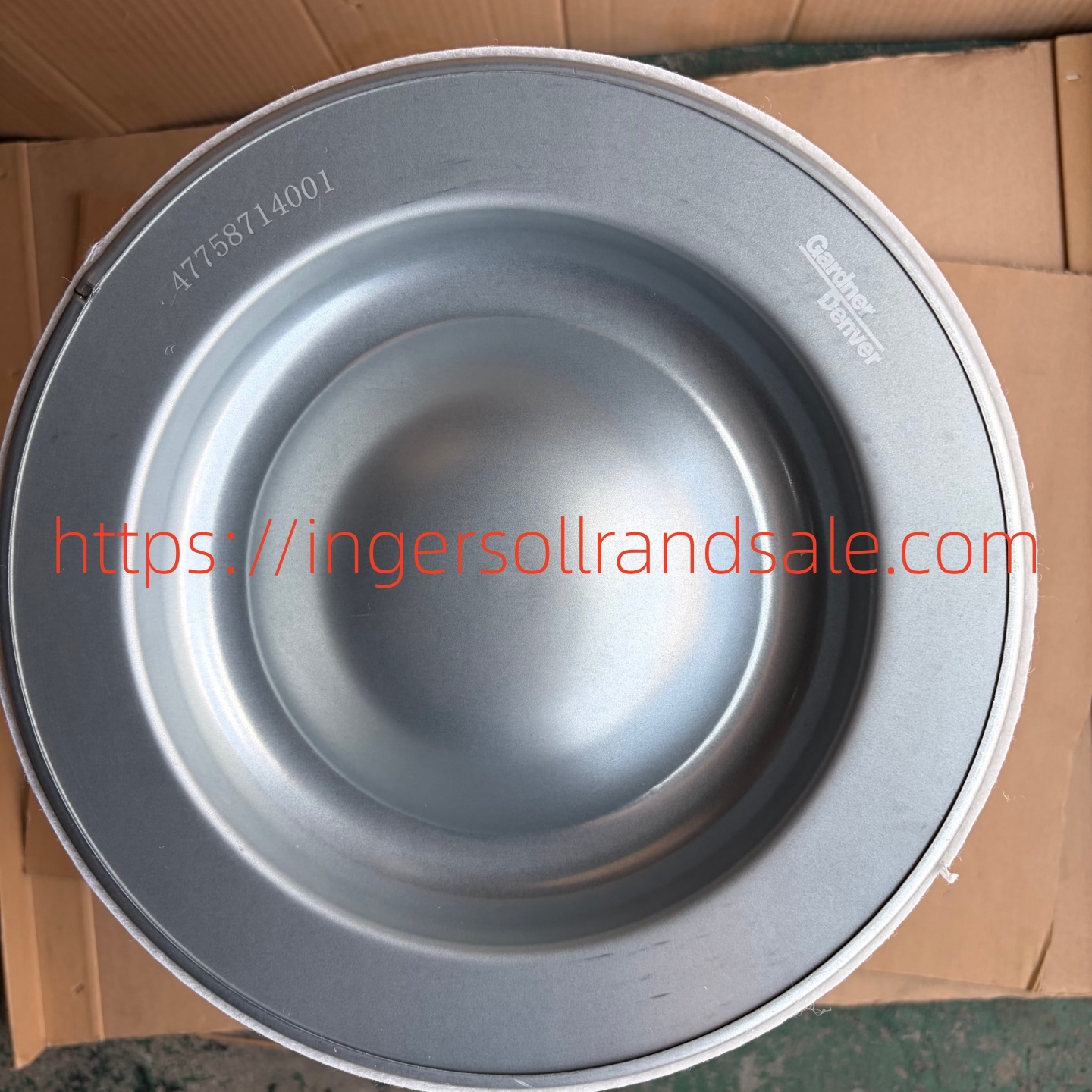
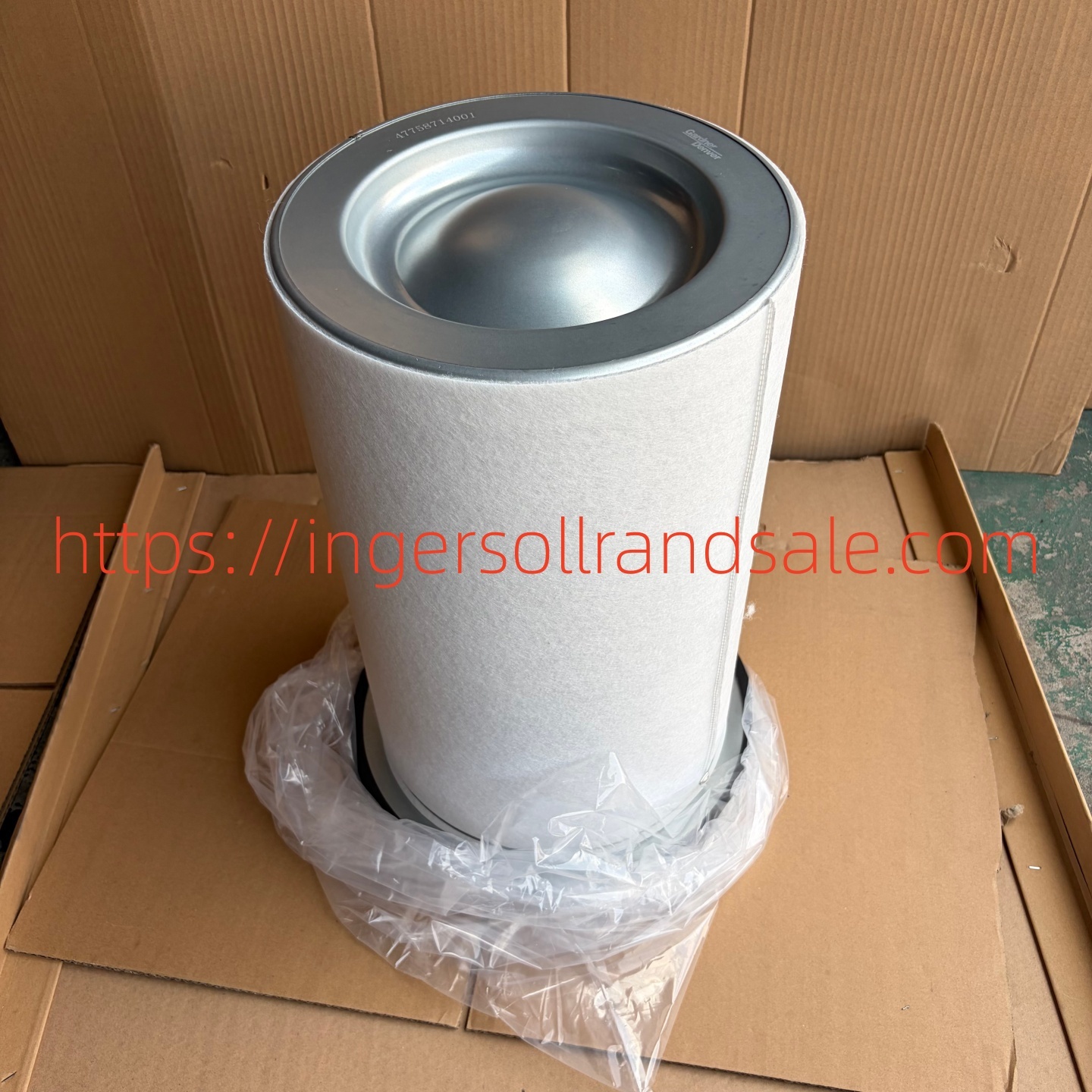
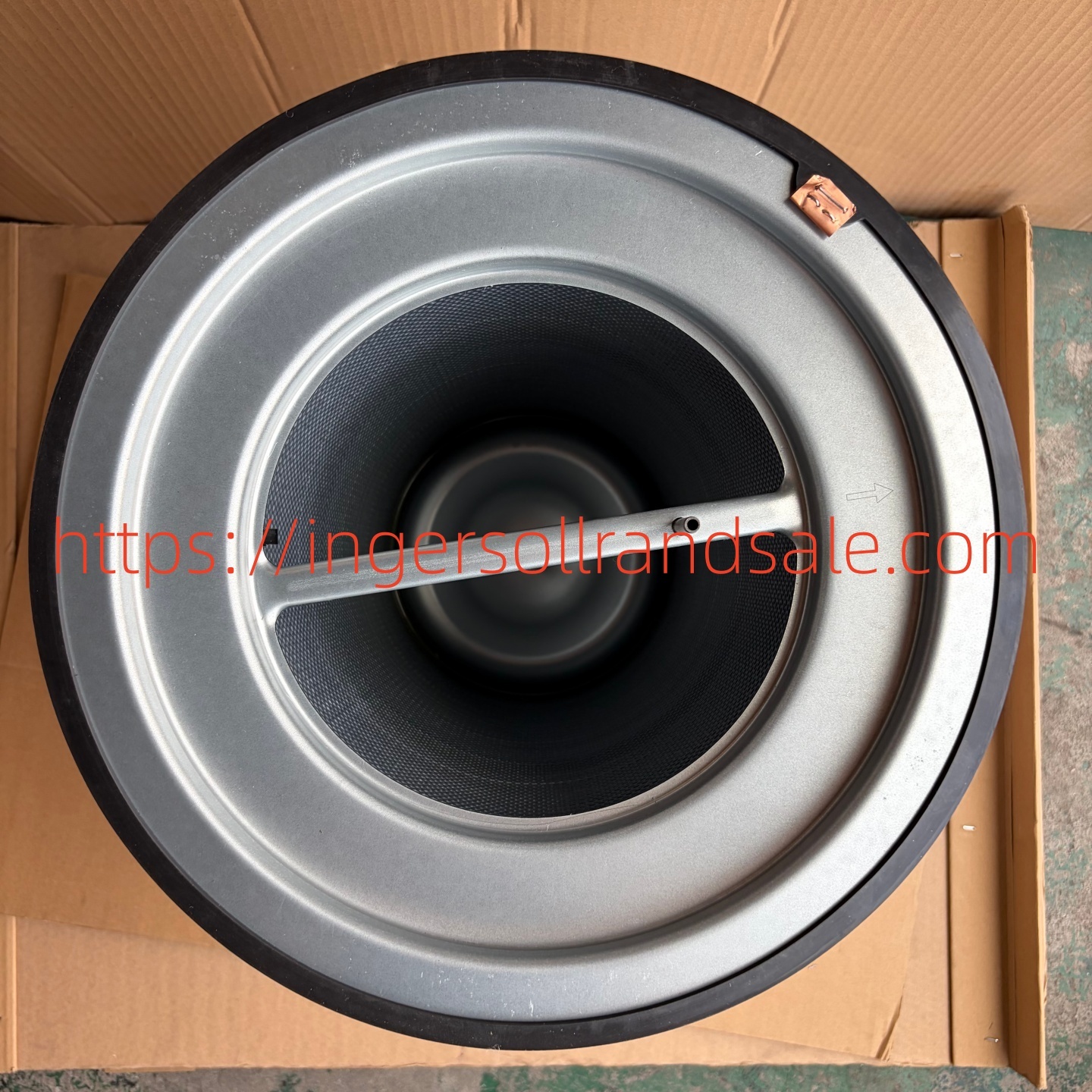
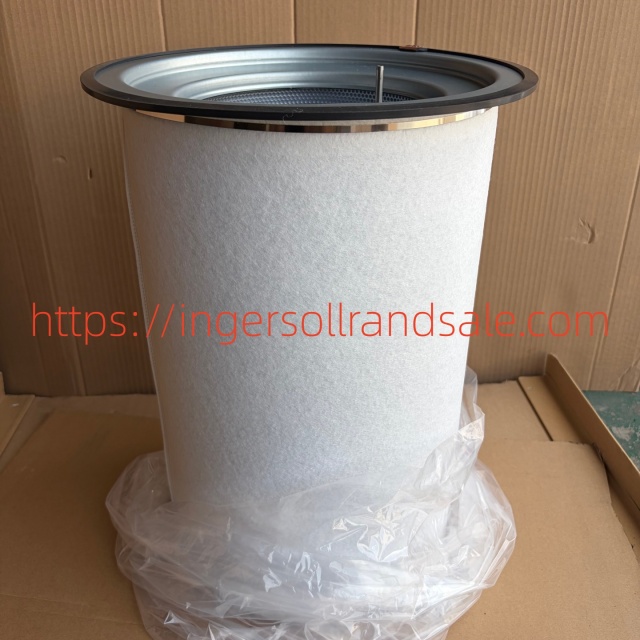
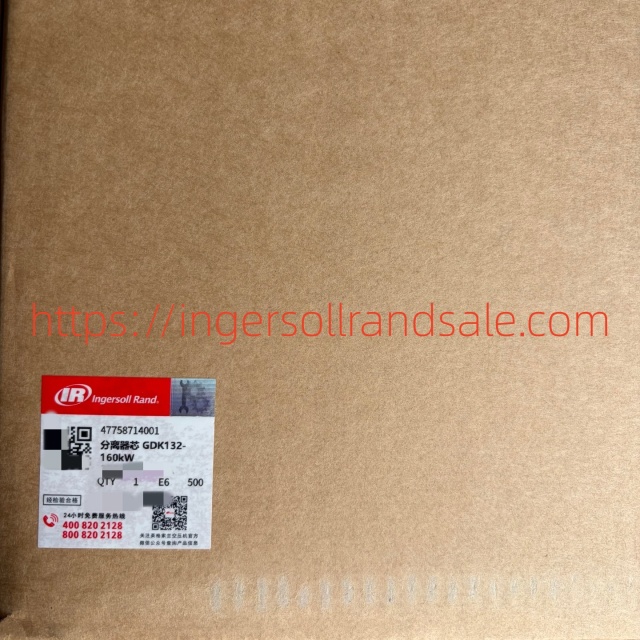
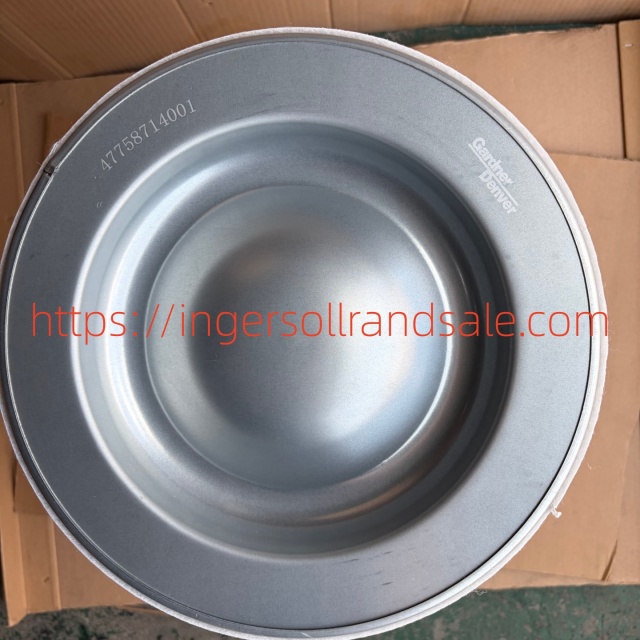
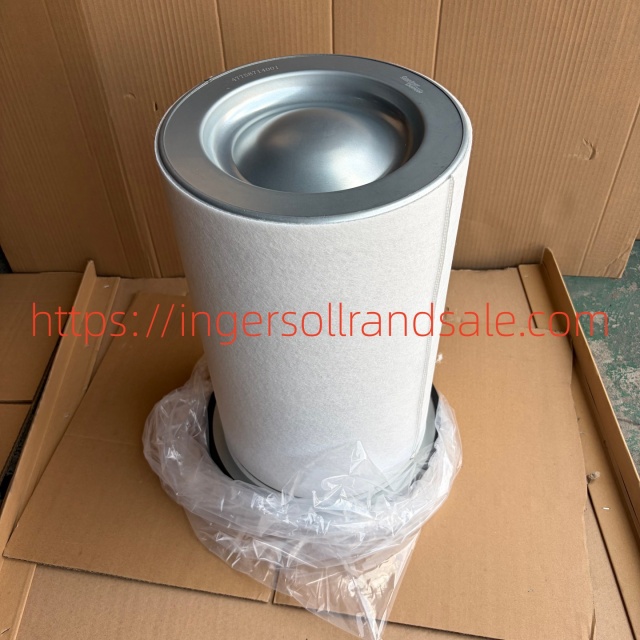
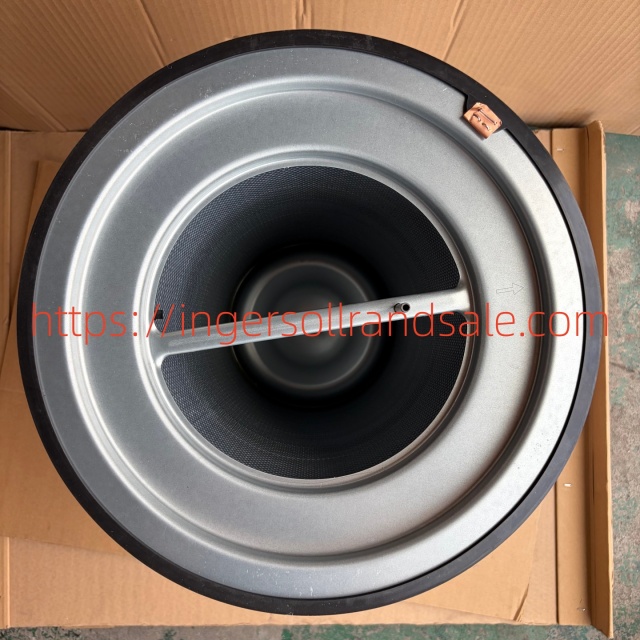
| Part No | 47758714001 |
| Brand | Ingersoll Rand |
| Origin | China |
| Weight | 14.5 kg |
| Dimensions | 38 × 38 × 55 cm |
| HS Code | 8414909090 |
| Fits | GDK 132-160 |
| Lead time | 1-2 weeks |
The oil separator is what keeps oil out of your air line. Air leaves the airend carrying oil mist; the element coalesces that mist into droplets and returns the oil to the sump through a return line. On a healthy element, carryover stays below 3 ppm. On a saturated one it climbs, and you find out through the air line, the dryer and the end product rather than through a warning light.
The element is a multi-layer glass fibre cartridge. Oil quality and site contamination shorten its life more than running hours do.
Oil pressure above air pressure is the one to act on. It means the element is badly loaded, and continuing to run it risks carrying glass fibre downstream.
Replace on condition, not on a fixed clock. Check the differential pressure reading at every service and replace as soon as carryover or oil pressure says the element is loading up. A separator run to failure costs a set of downstream filters and possibly a dryer.
In practice most sites change it with the oil filter, which lands around 2,000-3,000 running hours on clean sites and sooner where the oil or the environment is poor.
Two things get skipped here: the earth connection and the return line orifice. Both produce repeat failures within weeks.
On GDK 132-160 the separator is changed with the oil filter and the air filter:
The difference sits in the glass fibre layering and the bond to the end caps. A 132-160 kW machine pushes a high oil flow through this element, so a copy that looks identical on the bench can lose efficiency well before it blocks. On a machine that runs continuously, the genuine element usually pays for itself in oil consumption alone. On a standby unit or a low-duty site, the alternative is a reasonable choice.
Quote 47758714001 with your machine model. Weight 14.5 kg, packed 38 × 38 × 55 cm. Lead time 1-2 weeks.